How to Start Investing in Gold and Silver in Singapore: A Beginner's Guide
Key Takeaways
- Singapore is basically the gold (and silver) investor’s paradise—no GST on investment-grade metals, no capital gains tax.
- You have options: physical bars and coins, gold savings accounts, ETFs, or even mining stocks—each has different pros and cons.
- Don’t overcommit at once. A small, regular investment beats a panicky big buy at the top!
- Physical bullion gives you peace of mind, but factor in storage and the premium over spot. Not all that glitters is a good deal.
- Buy from reputable dealers only. Counterfeits can happen, even in SG. I’ve seen horror stories.
Why Singapore Is a Prime Place for Precious Metals
I've bought gold and silver in a few countries over the years, and honestly, nowhere beats Singapore for cost and convenience. We get two big perks here: GST exemption on qualifying Investment Precious Metals (IPM), and absolutely zero capital gains tax. That means more of your profits stay with you, not the taxman. For the nitty-gritty on what counts as IPM, check the IRAS GST guide for precious metals/specific-business-sectors/precious-metals), but in short: gold ≥99.5% purity, silver ≥99.9%, platinum ≥99.0%—and from a recognised refiner.
Prices? As I’m writing this (April 2026), 24k gold hovers around S$205 per gram, while COMEX futures are near US$4,700/oz. That’s an all-time high. No wonder demand’s gone mad—UOB even requires appointments for physical gold buys! With all the global drama lately (think US-Iran tension, inflation worries), precious metals are back in fashion for wealth defence.
If you want more background, my Beginner’s Guide to Investing in Gold in Singapore (2026 Edition) is a solid place to start for the basics and some recent context.
Physical vs Paper Gold and Silver: What's Right for You?
You’ve got two camps: those who want to hold their metal (physical), and those who just want exposure to the price (paper). Both have their fans, and I’ve tried both. Here’s how I break it down:
Physical Bullion
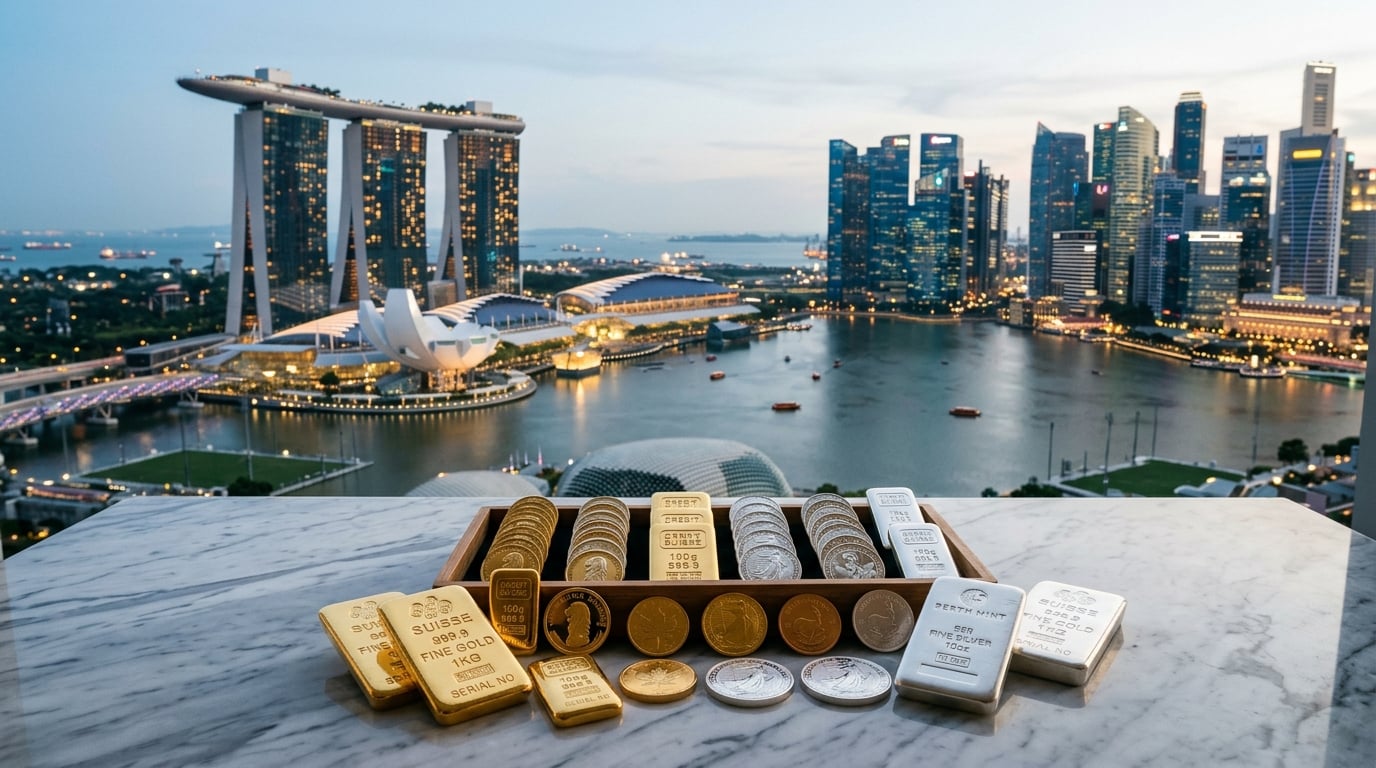
This is the real deal: bars, coins, or wafers you can stash in your own safe or a vault. Zero counterparty risk, which is why I always keep a chunk of my stack in physical form. Just make sure you’re buying IPM from an approved dealer, or else you might kena the 9% GST. Best-known dealers? BullionStar (my go-to, especially for their transparent pricing), GoldSilver Central, Silver Bullion (these folks are big in silver and storage), and UOB Main Branch (but good luck getting a walk-in slot lately).
Something I learned the hard way: always factor in the premium above spot price (that’s the dealer’s markup), plus storage and insurance if you want peace of mind. Here’s a quick comparison table I threw together based on current 2026 prices and typical premiums:
| Product | Spot Price (SGD/oz) | Typical Premium (%) | All-In Retail Price (SGD/oz) |
|---|---|---|---|
| Gold Bar (1 oz) | $6,370 | 2–4% | $6,500–$6,630 |
| Gold Coin (1 oz) | $6,370 | 4–8% | $6,620–$6,880 |
| Silver Bar (1 kg) | $1,020 | 7–12% | $1,090–$1,140 |
| Silver Coin (1 oz) | $41 | 12–20% | $46–$49 |
Premiums can swing a lot with demand. Recently, silver coins especially are nuts—sometimes over 20% above spot! Don’t pay more than you need, lah.
Paper Gold and Silver
Maybe you want flexibility, or you don’t want to deal with a safe deposit box (I get it). You’ve got three main alternatives:
- •Gold Savings Accounts (GSA): UOB offers a GSA (min. 5g, with 0.25% p.a. service charge now), and so does OCBC (min. 0.01oz, or about S$65). You don’t get physical metal with OCBC, just paper exposure, but it’s the easiest low-capital entry. These accounts are NOT insured by SDIC, and you can’t use CPF or SRS funds.
- •Gold ETFs: I’m a big fan of SPDR Gold Shares (SGX: GSD). It’s backed by real gold, low 0.40% annual fee, and you can use your CPF or SRS funds. The US-listed Gold MiniShares (GLDM) is even cheaper on fees, but honestly, I don’t like the estate tax risk if I croak with too much in a US ETF. Up to you.
- •Gold Mining Stocks: Companies like Barrick or Newmont are gold-related, but stocks behave very differently from the metal itself. You can get dividends, true, but also company risk and volatility. Tread carefully—it’s a different beast.
If you want a deeper look at the purity requirements and why it matters, see my Complete Guide to Gold and Silver Purity for Singapore Investors.

Singapore’s Tax Perks: Why Buying Here Makes Sense
This is honestly the main reason I never buy overseas if I can help it. IRAS makes it crystal clear: as long as your gold, silver, or platinum meets the IPM criteria, you pay no GST. And when you eventually sell, you keep ALL your gain—Singapore doesn’t tax capital gains or investment income on these metals. That’s rare globally.
One more bonus: if you’re buying the SPDR Gold Shares ETF on SGX, you can use your CPF OA funds under CPFIS, or your SRS. Most gold savings accounts don’t offer this, and neither does physical bullion, so if you’re stacking for retirement, this is a pretty efficient route. Want more? The MAS site has a good FAQ on how these products are regulated.
How Much Should You Start With?
People always ask me: “Eh Ribkin, how much should I put into gold?” Honestly, no one-size-fits-all. Most local advisers suggest somewhere between 5% and 15% of your portfolio as a hedge. You don’t have to go all-in tomorrow. Frankly, if you’re new, start with a few hundred dollars—just enough to feel the price swings without losing sleep.
- •If you’re on a tight budget, try the OCBC Precious Metals Account (entry from S$65) or buy one unit of SPDR Gold Shares via your brokerage. You get instant price exposure, low minimums, and no storage headaches.
- •Once you’re comfortable, consider picking up a small gold bar or even a silver coin. That feeling of holding real bullion? Can’t beat it.
- •As your stack grows, diversify—don’t just buy gold. Silver’s more volatile, and platinum’s an interesting wildcard.
You can check out my article on how tariffs and inflation are driving gold and silver prices in 2026 to see why sometimes it pays to average in slowly, especially with all this global drama.
Beginner-Friendly Tips That Saved Me Money
- •Stick to reputable sources. Too many fakes these days. I personally bought my first gold bar at BullionStar
- •Know your spread. The difference between buying and selling price is a hidden cost. Dealers post it online—compare before you buy. For example, gold bars usually have tighter spreads than coins.
- •Keep your receipts. Even though IRAS won’t tax your gains, it’s just good practice, especially to prove authenticity if you need to sell later.
- •Diversify within metals. Gold and silver don’t always move together. During the 2020s, silver shot up with “green energy” hype, while gold stayed relatively flat. Sometimes the underdog performs!
- •Calculate total costs. Storage at a vault or bank safe deposit box adds up—figure this into your returns, especially if you plan to hold long term. My vault fees average about S$150 a year per box, fyi.
Ready to Make Your First Move?
Opening a brokerage account in Singapore is straightforward these days. DBS Vickers, SAXO, FSMOne, Tiger Brokers, Moomoo—the list keeps growing. You can buy gold ETFs in minutes. For physical bullion, visit BullionStar or GoldSilver Central’s site to check current premiums and selection. Check with Singapore bullion dealers before pulling the trigger during peak periods—sometimes they literally run out of stock!
Look, precious metals investing isn’t as complicated as some people make it out to be. With the right tax environment, low minimums, and a bit of common sense, it’s one of the easier ways to hedge your savings in Singapore. Happy stacking, lah.