How Global Inflation Shifts Are Rewriting Singapore’s Bullion Playbook

Key Takeaways
- Inflation’s impact on gold and silver isn’t as straightforward as it was a decade ago—timing your buys now needs more context.
- Singapore buyers are getting squeezed by global trends, but local premiums and demand quirks matter just as much.
- I’ve started favouring platinum lately—something I didn’t expect, but recent price data backs it up.
- Don’t trust old rules of thumb lah. Double-check what’s actually moving prices, especially with the SGD riding so strong.
Why Inflation Still Matters for Metals
Back in 2022–2024, when US CPI kept defying expectations, everyone and their uncle seemed certain gold would skyrocket. Fast forward to 2026, and the relationship between inflation and precious metals feels blur. Prices move, sure, but not always how you’d expect.
When the IMF dropped their global inflation update last quarter (see data), I dug into the numbers. Headline inflation is finally cooling off in the US and Europe, but Asian economies are still grappling with sticky core CPI. Theoretically, gold should’ve peaked and started to fade. But check the charts—gold in SGD terms is stubbornly sticky.
I don’t just look at raw inflation numbers anymore. Over the years, I’ve learned to watch real rates (interest minus inflation) and, more importantly, how much cash is sloshing around in the system. Too many people ignore that. If you want a step-by-step on how I actually buy when the data gets this murky, I covered my workflow in How I Actually Buy Physical Gold in Singapore: Step by Step.
What the Latest Numbers Are Telling Me
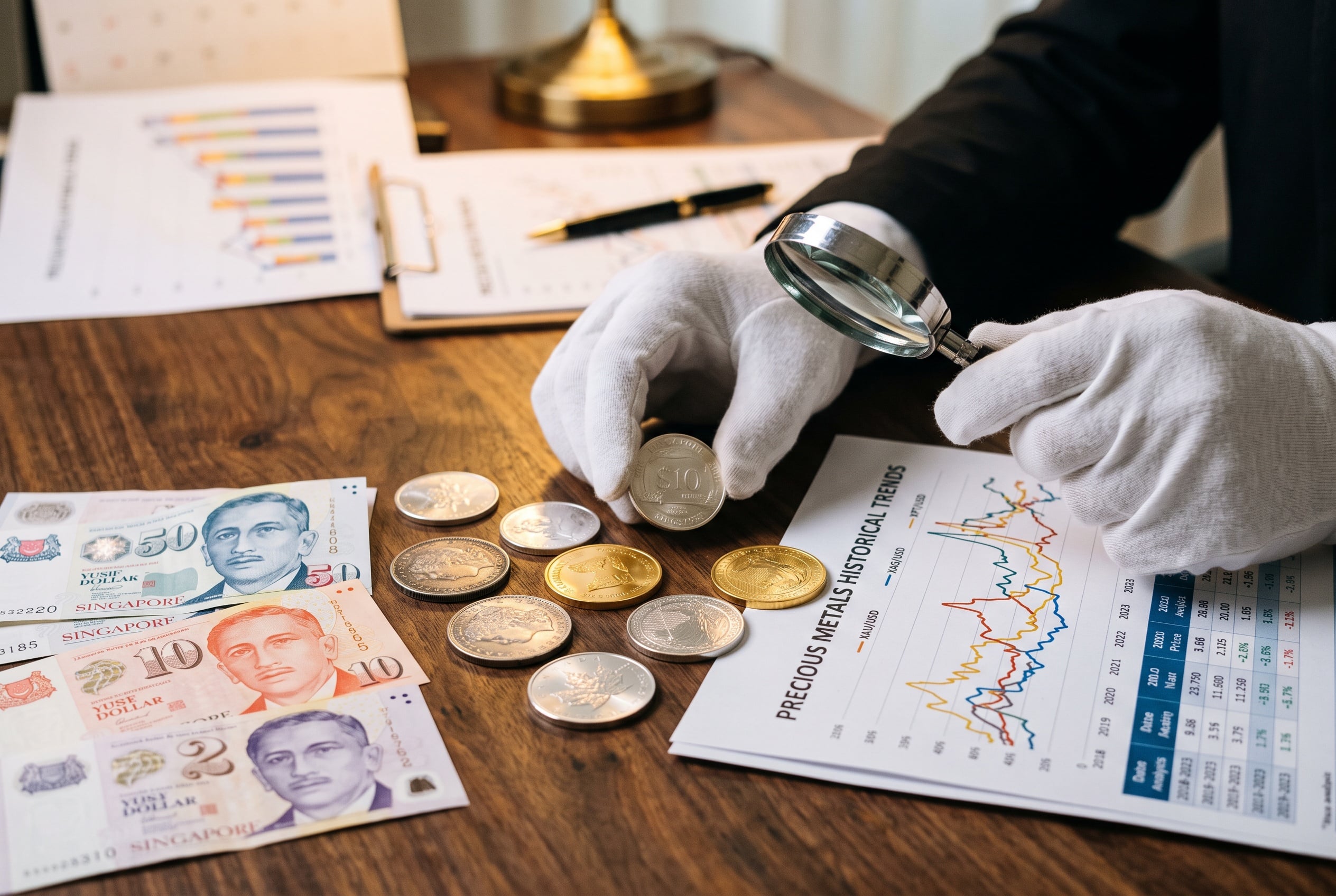
It’s one thing to talk theory. Let’s pull up some real-world numbers. Here’s how spot prices in SGD have moved against Singapore’s own inflation bumps (and throw in platinum for good measure):
| Year | Avg Gold Price (SGD/oz) | Avg Silver Price (SGD/oz) | Avg Platinum Price (SGD/oz) | S’pore CPI (%) |
|---|---|---|---|---|
| 2022 | $2,475 | $32.10 | $1,420 | 5.5 |
| 2023 | $2,650 | $34.20 | $1,530 | 4.1 |
| 2024 | $2,775 | $38.60 | $1,485 | 3.8 |
| 2025 | $2,690 | $37.10 | $1,750 | 2.7 |
| 2026 | $2,820 | $39.40 | $1,950 | 2.3 |
You see the pattern? Gold plateaued, silver got a minor boost, but platinum absolutely ripped higher even as local inflation cooled.
Not gonna lie, this caught me off guard—I was used to platinum lagging for years. Turns out, there’s a supply squeeze thanks to Russian flows drying up, and new EV demand picking up. If you missed my deep dive, my Singapore Showdown: Platinum Coin vs Bar—My Practical Buyer's Guide explains why I’m now stacking more platinum than before.
CPI numbers tell only half the story. The other half is market psychology. After the crazy spike in gold back in early 2025 (remember that scramble?), I walked through how even Singapore’s “calm” market got blindsided in How a Sudden Gold Price Spike Caught Me—and Singapore—Off Guard.
How I’m Rethinking My Metal Buys in 2026
Honestly, my strategy’s changed since inflation’s run cooled.
Watching Real Rates, Not Just Headlines
Blindly watching CPI doesn’t cut it anymore. I keep one eye on what MAS is signalling (go read the World Gold Council’s analysis on Asian demand shifts), but real yields are the main trigger for me now. When those drop below 1%, gold often gets its legs, regardless of day-to-day CPI swings.
Playing the Premium Game
It used to be “just buy bars, not coins.” But premiums have been all over the place lately. Some of my best purchases this year were actually coins—like the Royal Canadian Mint 1 oz Silver Maple Leaf 2014 Coin, which occasionally drops below spot (rare, but happens). For platinum, I alternate between coins and bars; sometimes one is cheaper than the other by 3–4%.
Portfolio Mix—Not All Metals React the Same
I’m now running heavier platinum (almost 30% of my metals stack, up from 10% five years ago). Gold is still the anchor. Silver’s nice for liquidity and speculation, but its price has been, honestly, a bit meh given the inflation fireworks. If you want to see how I’m shaping my precious metals portfolio for 2026 (and what I absolutely avoid), read How I Build a Precious Metals Portfolio (and What I’d Avoid in 2026).
Where I Buy—And What’s Still Reliable
I switch between direct dealers and platforms, but my long-term experience with BullionStar means they’re still my first checkpoint for Singapore pricing. Especially when sudden inflation surprises hit and other places hike premiums overnight.
Where Singapore Fits (and Why It’s Different)
A lot of Western headlines ignore this, but Singapore buyers face a unique mix:
- •Strong SGD means imported bullion isn’t as volatile as in weaker-currency economies
- •MAS policy floats between inflation control and global competitiveness
- •Domestic demand is rising, but the supply chain is super responsive (no crazy shortages, unless it’s a true panic)
I've noticed local premiums can swing widely, but we don’t get gouged the way some US or EU buyers do. That means you have to be nimble—sometimes a Royal Canadian Mint 1 oz Maple Leaf 2016 Silver Coin is a screaming bargain, sometimes not. Also, don’t underestimate how quickly the mood shifts here; just ask anyone who tried to buy during the last major gold surge.
The best ongoing resource for global inflation and precious metals is still sites like the IMF and the World Gold Council, but always sanity-check those numbers against local pricing lah.
Final Thoughts
If you’re betting on metals in 2026, you can’t just rely on lazy inflation logic anymore. Watch real rates, track premiums, and don’t ignore how local quirks in Singapore change the game. Old rules don’t always work—be willing to adapt, or risk getting left behind.