How I Actually Buy Physical Gold in Singapore: Step by Step

Key Takeaways
- Physical gold is GST-exempt in Singapore—but only for certain bars/coins. Check before you buy, don’t just assume!
- The “premium” hype for fancy coins? Usually, a waste here. Go for recognised bullion bars or basic coins for value.
- Mistakes like overpaying for rare coins or collector hype are still common. I’ve made them, no shame.
- Compare prices across several dealers, including their buyback rates. Don’t get shy—the difference can be real money, lah.
Why Physical Gold Still Makes Sense in Singapore
Honestly, it shocks me how many Singaporeans still assume gold is just something your grandmother hoards under her bed. Maybe that's true for some, but hear me out: physical gold still checks the boxes for privacy, long-term store of value, and disaster insurance. Especially in Singapore, with our zero-GST regime (on investment-grade products), you’re getting it as “clean” as it gets.
MAS and IRAS have specific rules for what counts as investment-grade precious metals. Basically, it needs to be at least 99.5% pure for gold, from a recognised refiner, and in the right form (bars/coins that are legal tender or meet certain criteria). If you’re curious, you can read the official IRAS GST Guide/specific-business-sectors/precious-metals).
One big plus: gold is incredibly liquid here. Most decent-sized dealers will buy back recognised bars without much fuss, so you’re not stuck if you ever need fast cash.
Step 1: Decide What Type of Gold You Want
Bars vs Coins
My first ever gold purchase in 2013? I went for a fancy coin because I thought, “Wah, must be more legitimate if it's pretty.” Wrong, lah. The resale market for most of these “collector coins” is terrible — you pay a premium, then get lowballed at buyback.
If you only care about investment, bars almost always offer a better spread (lower premium over spot). Coins like the Maple Leaf or Krugerrand are good too, but only stick to globally liquid ones. Don’t let some slick salesperson talk you into “limited edition” coins unless you really know the numismatic market. For more on that mistake, I recently wrote about why ‘premium’ gold and silver coins are mostly a waste in Singapore.
What Size?
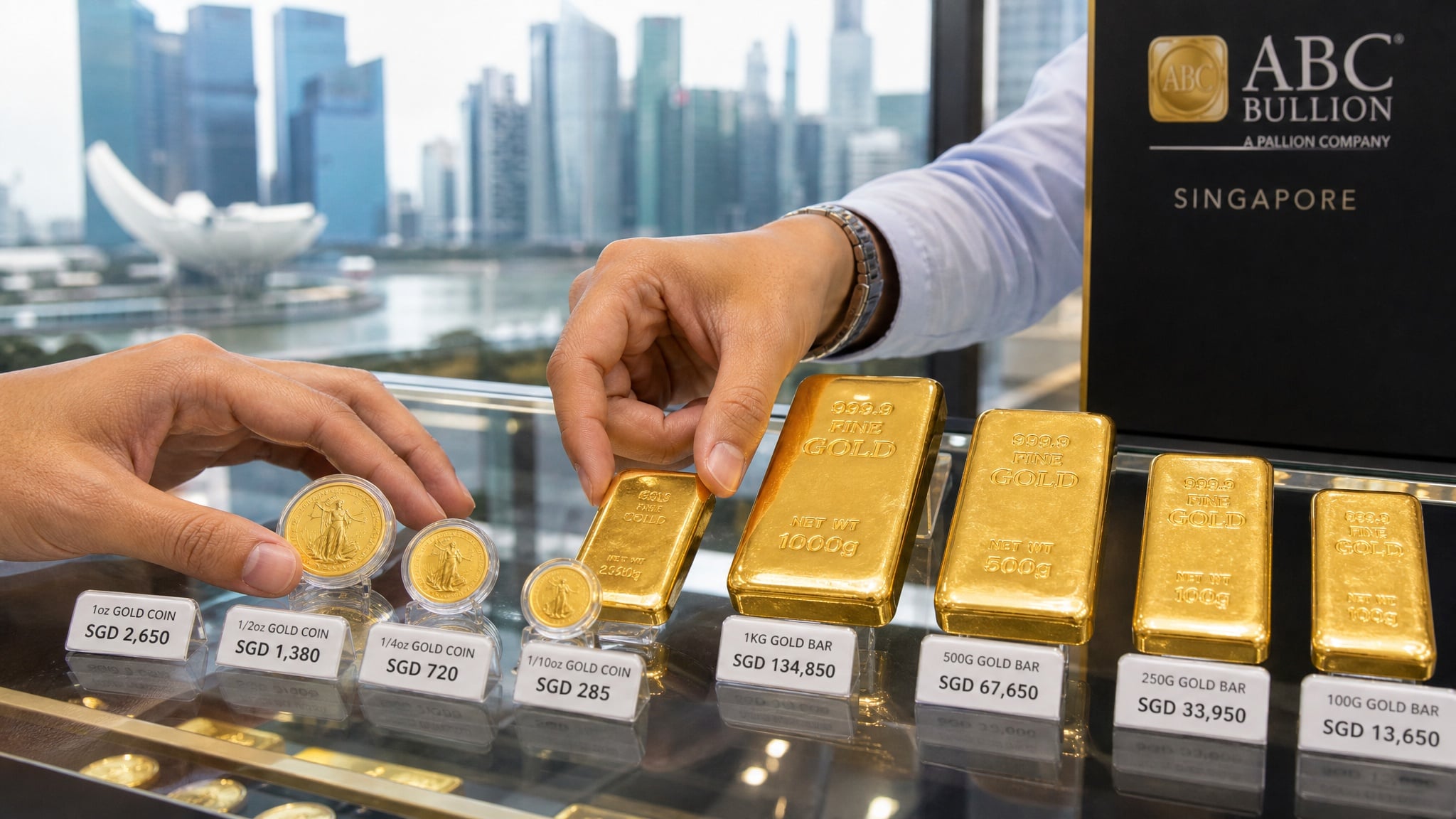
Short version: buy the biggest size you can comfortably afford. The per-gram premium usually drops as you go up in weight. But don’t go so big that it’s a hassle to sell later—1 oz or 100g bars are a sweet spot for most.
#### Example Comparison Table
| Product | Weight | Premium Over Spot (SGD) | GST Applicable? |
|---|---|---|---|
| PAMP Suisse Gold Bar | 1 oz | ~$80 | No |
| Maple Leaf Coin | 1 oz | ~$100 | No |
| Random Collector Coin | 1 oz | $200+ (sometimes) | Sometimes |
| Jewellery (22k) | 1 oz | $300+ | Yes |
Step 2: Narrow Down Where to Buy Gold
A lot of first-timers default to banks. They seem “safer”, but banks in Singapore mostly sell at crazy mark-ups, limited choice, and seriously uncompetitive buyback rates. I did that once out of paranoia—never again.
Most of my buying these days is either through BullionStar (affiliate link, I admit) or UOB’s online gold trading, though the latter is really more for unallocated gold.
Local Dealers to Check
- •BullionStar — Easily the most user-friendly for both walk-in and online. Transparent pricing.
- •UOB (for 1kg bars, mostly)
- •GoldSilver Central — Decent selection, but slightly higher premiums at times.
A trick I learnt: compare not just the selling price, but the buyback price too. Sometimes, the dealer offering the lowest up-front cost lowballs you hard when you want to sell back.
Step 3: The Price Comparison Trap (and GST Nightmares)
I once nearly bought a nice “ASE” (American Silver Eagle) only to find out GST was tacked on—an extra 9% pain. Not every shiny coin is GST-free. Always check the fine print, and if in doubt, use the IRAS GST Guide for Precious Metals/specific-business-sectors/precious-metals).
Price Components to Watch
- •Spot Price: The “real” gold price, changing 24/7. Most Singapore dealers update their prices every 5-10 minutes.
- •Dealer Premium: The fee for all the effort, packaging, and overhead. Varies wildly!
- •Buy/Sell Spread: The hidden cost most beginners ignore. Sometimes it’s $20, sometimes $100 per ounce.
- •GST: If you choose a non-investment grade product, GST can ruin your returns. Jewellery is almost always taxed.
If you’re serious about building a substantial holding, you’ll want to read How I Build a Precious Metals Portfolio (and What I’d Avoid in 2026). The right mix of bars and coins does matter.
Step 4: Actually Buying—Process, Pickup & Storage
Ordering & Payment
The routine now feels second-nature to me, but my first time was intimidating. Most main dealers let you buy online—lock in your price, then you can bank transfer/PayNow the funds. If you prefer to see the goods, just walk in (bring your NRIC for verification, as MAS regulations require).
I usually insist on checking the packaging and serial numbers. Some friends consider that “paranoid”, but I say better safe than sorry.
Pickup or Storage?
I’m fussy, so I like to physically collect. But if you buy a lot or want ultrasecurity, almost every major dealer offers vault storage (for a fee). I’ve used BullionStar’s vault for a while when I went on long trips, but now mostly self-store in a small home safe. Just don’t tell half your kampong about it, lah.
Sell-Back Process
Selling is as fuss-free as buying, provided you have the original packaging and receipt. The major dealers usually pay you within a couple of working days. But note that with rare coins or “special” products, the bid-ask spread can be brutal.
Common Mistakes (and How I Screwed Up)
I’ll be honest: my first couple of buys were not smart. Here are mistakes I made, and still see all the time:
- •Overpaying for Hype: That “rare” coin I got in 2015? Sold it at a 10% net loss even after gold rose! Sometimes rare just means hard to sell. I wrote a whole post about why I once passed over a rare coin and the lessons from a Singapore collector.
- •Falling for the Big Bar Trap: Thought a 1kg bar would be cool. Regretted it once I needed to sell — illiquid and hard to break up. Now I go for 1oz or 100g bars.
- •Ignoring Buyback Price: Rookie move is to only look at sell price, but it’s the spread that kills returns.
- •Not Double Checking GST: Nearly got burned when I didn’t realise a “limited mintage” coin was GST-liable.
Useful Resources for the Singapore Gold Buyer
- •IRAS GST Guide/specific-business-sectors/precious-metals): Must-read if you’re ever confused whether GST applies.
- •MAS: The official stance on what’s “regulated” in the bullion sphere here.
- •Dealer blogs (there’s some gem advice buried in BullionStar’s education section)
If you want my deeper thoughts on platinum hype, you can check out Why the Platinum Bullion Hype in Singapore is Completely Overblown—I’m still not convinced on that one, lor.
Buying gold in Singapore is straightforward, but not idiot-proof (I’ve proven that). Once you get the hang of it, it’s one of the most satisfying financial moves you can make. If you find a killer deal or run into a weird snag, drop me a note—I still love hearing these stories.