Why 'Premium' Gold and Silver Coins Are Mostly a Waste in Singapore

Key Takeaways
- Most so-called ‘premium’ coins just end up costing you more for no real benefit—plain bullion bars or government coins are almost always the smarter move in Singapore.
- Resale is king here. Local dealers (and fellow stackers) are much more interested in recognisable, low-spread coins than fancy limited editions.
- GST-exempt bullion is your friend: stop getting distracted by shiny packaging or serial numbers if your goal is wealth protection, not collecting for fun.
- Honestly, unless you really love a design for personal reasons, skip the expensive collector stuff and buy more ounces instead.
Why 'Premium' Coins Get Too Much Hype
I’ve lost count of the number of newbie investors who message me, excited about their “special edition” silver eagle or commemorative gold coin. Singapore dealers love to market these coins as “limited mintage” or “first strike” or “privy mark” as if those make a difference for your profits down the road. Let’s be real for a second.
In over a decade of buying and selling metals here, I’ve never had a dealer offer me a higher price for a ‘premium’ bullion coin versus a generic one—unless it’s truly rare, and even then, only occasionally. For the vast majority, that $20-50 you pay above spot is just… gone.
If you check out my thoughts on Why Most 'Collector Coins' Are Losing You Money (and What Actually Matters), I share real examples of how hype doesn’t translate to resale value locally. The harsh truth in Singapore: the market just isn’t big enough (or passionate enough) for these premiums to hold up.
Honestly, I think the only real winners from ‘premium’ coins are the mints themselves, who get to squeeze extra margin from FOMO.
The Real Cost: Comparing Premiums in Singapore
Let’s put numbers to the problem. Here’s a sample of current premiums (mid-2026) on a 1 oz silver coin, based on actual listings from Singapore dealers:
| Product Type | Typical Price (SGD) | Spot Price (SGD) | Premium Over Spot | GST Exempt? |
|---|---|---|---|---|
| Standard Maple Leaf | $49 | $41 | $8 (20%) | Yes |
| 'Special Edition' Maple | $62 | $41 | $21 (51%) | Yes |
| Generic Silver Round | $47 | $41 | $6 (15%) | No |
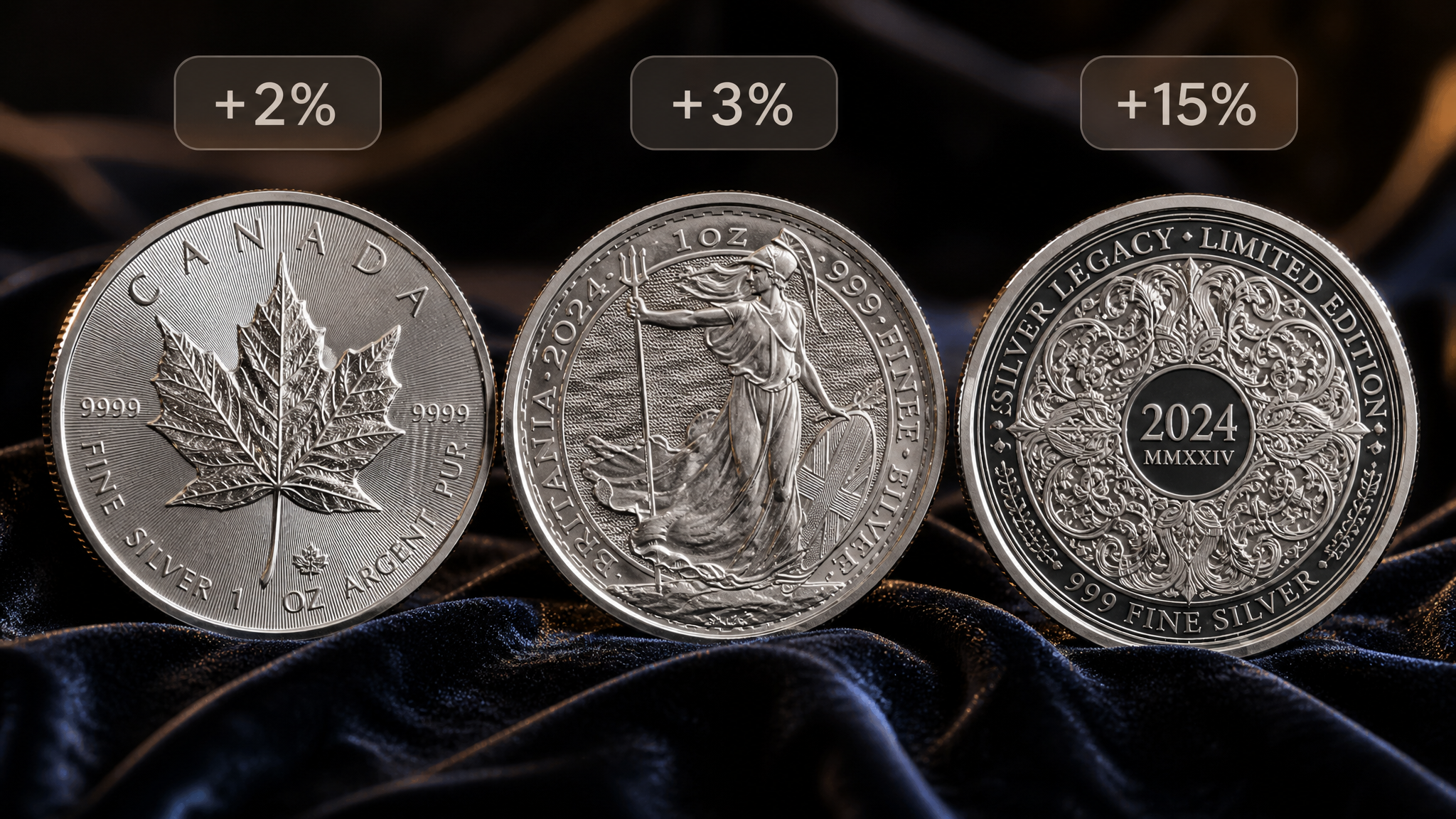
You’re paying an extra $13 per ounce (and sometimes more for flashy boxes or COAs) for basically the same amount of silver. Multiply that by a tube of 25 coins and you’re losing hundreds right from the start.
Oh, and don’t forget—when you sell later, you’re almost certainly getting paid on the same basis as the standard silver coin. That special edition wolf privy? Most buyers (including dealers) will yawn and price it like any other Maple.
For those who want a deep-dive into which gold bar brands actually matter for resale, check my breakdown of PAMP versus Argor-Heraeus gold bars. Spoiler: the answer isn’t more expensive always means better.
Liquidity and Exit: The Hidden Problem With Premiums
No one talks about this enough, lah. Liquidity is way more important than packaging or mintage numbers. When you want to cash out, especially in a hurry, you’ll quickly realise that the only thing that matters is how recognisable and standard your coin is—Maple Leafs, Eagles, Britannias. Not some random “Year of the Dog, High Relief, Reverse Proof” edition only your online forum kakis know about.
A dealer once offered me the exact same buyback price for a supposedly rare Perth Mint dragon coin as for a plain-jane Britannia. After that, I stopped buying anything fancy unless I wanted the design for my own display, not as an investment.
And if you’re holding metals for actual wealth insurance—protecting yourself from currency risk or inflation—why would you want reduced liquidity? Quick tip: Stackers in Singapore tend to favour GST-exempt coins and bars, as outlined in Singapore’s GST Exemption: How It Shapes the Way I Buy Gold and Silver. If your coin doesn’t qualify, you’re making things harder for yourself.
Exceptions and Edge Cases (Rarely Worth It)
Alright, I’ll admit—there are a few exceptions. If you’re a hardcore collector and you genuinely love having every lunar series in perfect boxes, that’s your hobby and I’m not here to judge. Sometimes a true rarity (low mintage, crazy demand from overseas) can fetch a high price, but those are unicorns, not the norm.
Also, for some reason, the Royal Canadian Mint Maple Leafs sometimes fetch a tiny premium for certain years if there was a famous “error” or oddity. But that’s speculation, not sound stacking. If you must itch the collector side, maybe just grab one or two from different years—like the 2021 Silver Maple Leaf or a 2022—and spend the rest on cheaper bullion.
If you want to check what IRAS says about what’s exempt, look up their official GST guide for precious metals. Worth checking before spending your hard-earned dollars on something that’s just going to eat up your gains with GST.
Smarter Moves for Singapore Stackers
Here’s my actual stacking routine in Singapore, not the ‘influencer’ fluff you see elsewhere: I buy the lowest-premium, GST-exempt coins or bars I can find from trusted local dealers (often through BullionStar), and I ignore fancy boxes or pretty marketing. More ounces, less nonsense.
If you care about resale, demand and liquidity always trump shininess. Government-minted coins like the Royal Mint 1/10 oz Britannia 2025 Gold Coin are easy to offload, even at a premium to bars sometimes, because everyone knows them. But the basic rule remains: premiums eat into your stack every single time.
If you want a practical approach, see how I structure my own purchases in How I Actually Build My Gold & Silver Stack: Honest Strategies That Work. It’s not magic, just common sense and a bit of discipline.
Stick to the basics. If you love the way a coin looks, buy it for fun lah—but don’t kid yourself it’s some secret investment edge. For the rest of us just trying to protect our savings, those extra dollars spent on premiums are better off buying a few more grams.
For some fun rabbit holes, the World Gold Council has detailed stats on bullion demand—good to know you’re not alone!
You want more real gold and silver for your money, not fancier certificates or shinier cardboard. Don’t let marketing trick you into thinking otherwise.