What Makes a Precious Metal 'Investment-Grade' in Singapore?
Key Takeaways
- Only precious metals that meet IRAS' investment-grade criteria qualify for GST exemption in Singapore—read the rules, or risk paying 9% more!
- Criteria aren’t just about purity, but also about form, recognisability, and global acceptance.
- The difference between a legal gold bar and decorative one is thousands of dollars over time (ask me how I found out the hard way—with a silver dragon bar, lor).
- Not all coins—even famous ones—meet the requirements, so always double-check before you buy.
Why 'Investment-Grade' Matters in Singapore
Here's the thing: when I started out buying gold and silver a decade ago, "investment-grade" sounded like pure marketing spin. Now? I lose count of the number of people who get caught off guard by GST, just because they missed one tiny detail: in Singapore, if your bullion isn’t officially "investment-grade" under IRAS, you pay 9% GST—no exceptions. That’s as true for a fancy silver statue as it is for some obscure Scandinavian coin.
For a lot of us, precious metals aren’t just for show—they’re a hedge, a store of value, and yes, sometimes a bit of fun. But it gets serious when you start adding up the costs. A one-ounce gold coin that’s investment-grade is automatically more liquid and more cost-effective than a beautiful but non-qualifying piece. GST really bites when you’re talking about five-figure buys, lah.
How Singapore Defines Investment-Grade Precious Metals
IRAS Criteria: Not Just About Purity
IRAS (Inland Revenue Authority of Singapore) has a very specific guide to IPM/specific-business-sectors/precious-metals). You can't just walk in, buy any shiny bar, and expect GST exemption. It has to check all these boxes:
- •Purity: Gold must be ≥ 99.5% pure, silver ≥ 99.9%, platinum ≥ 99%.
- •Form: Bars, ingots, wafers, or coins.
- •Recognised Refiners: Bars must come from refiners on the LBMA, LPPM, or relevant "Good Delivery" lists.
- •Coins: Only coins minted after 1800, legal tender in their country, and usually traded at a value not much higher than their precious metal value.
Basically, numismatic (collectible) coins, medallions, or decorative items do not qualify, and you pay GST.
#### Quick Table: IRAS Criteria at a Glance
| Metal | Minimum Purity | Bar Refiner? | Coin Requirements |
|---|---|---|---|
| Gold | 99.5% | LBMA-recognised | Post-1800, legal tender, price close to spot |
| Silver | 99.9% | LBMA-recognised | Same as gold |
| Platinum | 99% | LPPM-recognised | Same as gold |
Common Qualifying Coins and Bars
A lot of folks are surprised to learn not all big-name coins qualify. For example, the famous Royal Canadian Mint 1 oz Silver Maple 2012 Coin is GST-exempt, but some commemorative Maples aren’t!
- •Gold: The Royal Mint 1 oz Oriental Border Britannia 2020 Gold Coin is a classic. Always liquid, always GST-free.
- •Silver: The Perth Mint Kangaroo series—like the 2024 and 2025 coins—are competitively priced and universally recognised.
- •Platinum: I've written about this in detail at Why Platinum Is Shockingly Undervalued in Singapore (August 2026). If you only stick to investment-grade, you avoid unnecessary taxes and get better resale.
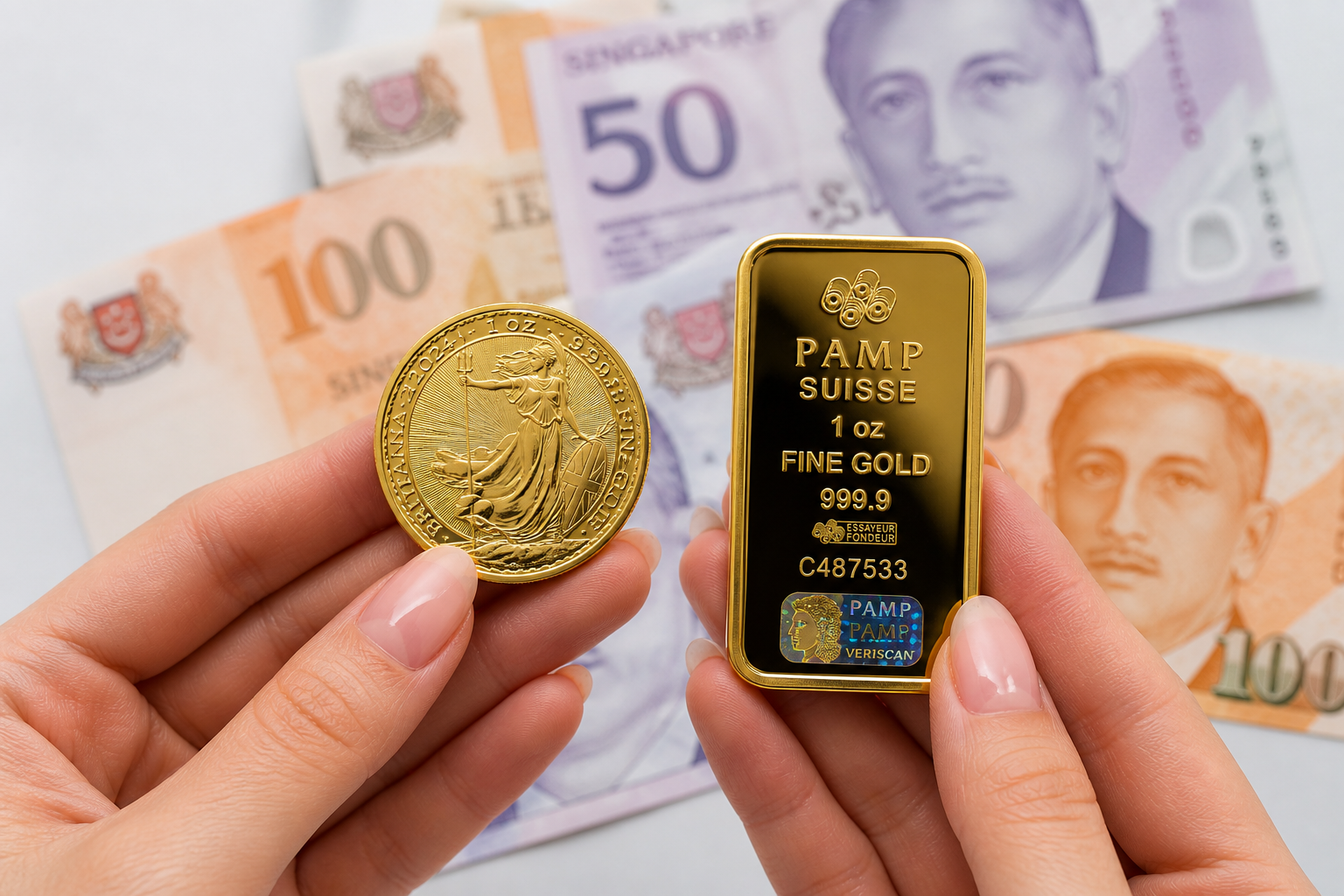
A few brands—PAMP, Valcambi, Metalor—are nearly always accepted so long as their bars are from their LBMA/LPPM registered lines. You’ll find a good variety (and transparent GST status) at larger dealers like BullionStar.
The GST Impact: Real Numbers
Let's put it in black and white. Say you’re deciding between an investment-grade and a non-qualifying piece, both one ounce of gold. Here’s a quick comparison based on 17 Aug 2026 spot prices (SGD 3,400 / oz for gold):
| Type | Price (SGD) | GST (9%) | Total Cost |
|---|---|---|---|
| Investment-grade gold coin | 3,420 | 0 | 3,420 |
| Decorative/non-qualifying gold | 3,400 | 306 | 3,706 |
That’s a painful $286 difference—per ounce! Over a decade, buying non-qualifying bullion could cost you enough to buy another whole coin or two. The same goes for silver and platinum (but GST percentages will change if it ever gets revised again—always double-check the IRAS GST page/specific-business-sectors/precious-metals)).
If you want to know more about current price trends and what drives them, check out my deep-dive: Singapore Gold & Silver Prices: What’s Really Driving 2026 Market Moves?.
Practical Tips for Buying - My Experience
What I Check Before I Buy
Not gonna lie, I’ve bought a couple of “pretty” ounces in my early days, only to realise they weren’t GST-exempt. It still annoys me whenever I see those dragon-shaped bars in my safe, lah. Here’s my personal checklist now:
1. Always read the product description. If it doesn’t explicitly say “GST-exempt” or “investment-grade,” I dig further.
2. Ask the dealer. If they can’t cite IRAS or show the refiner’s accreditation, I just walk away.
3. Cross-reference with IRAS lists or the World Gold Council reference.
4. Double-check coins for legal tender status. Some special editions look like the classic coin, but aren’t backed by a government anymore.
Honestly, the safest bet is to just stick to the classics for bulk buys. But if you want a collector piece, treat that as a totally separate hobby—expect GST, and don’t kid yourself it’s "investment-grade".
What the Data Tells Me
Looking through my own records (yes, I do track every transaction), I save about $2,500 every 10 years just by avoiding GST on standard gold and silver coins. And that’s not even counting the easier resale—dealers and buyers much prefer liquid, globally recognised bullion.
If you want to see how these choices fit in a practical portfolio, I wrote up my approach in How I Build a Precious Metals Portfolio in Singapore (The Simple Way).
No one wants to overpay for the sake of a shiny design. Get the rules right from day one, and your stack will thank you down the road.